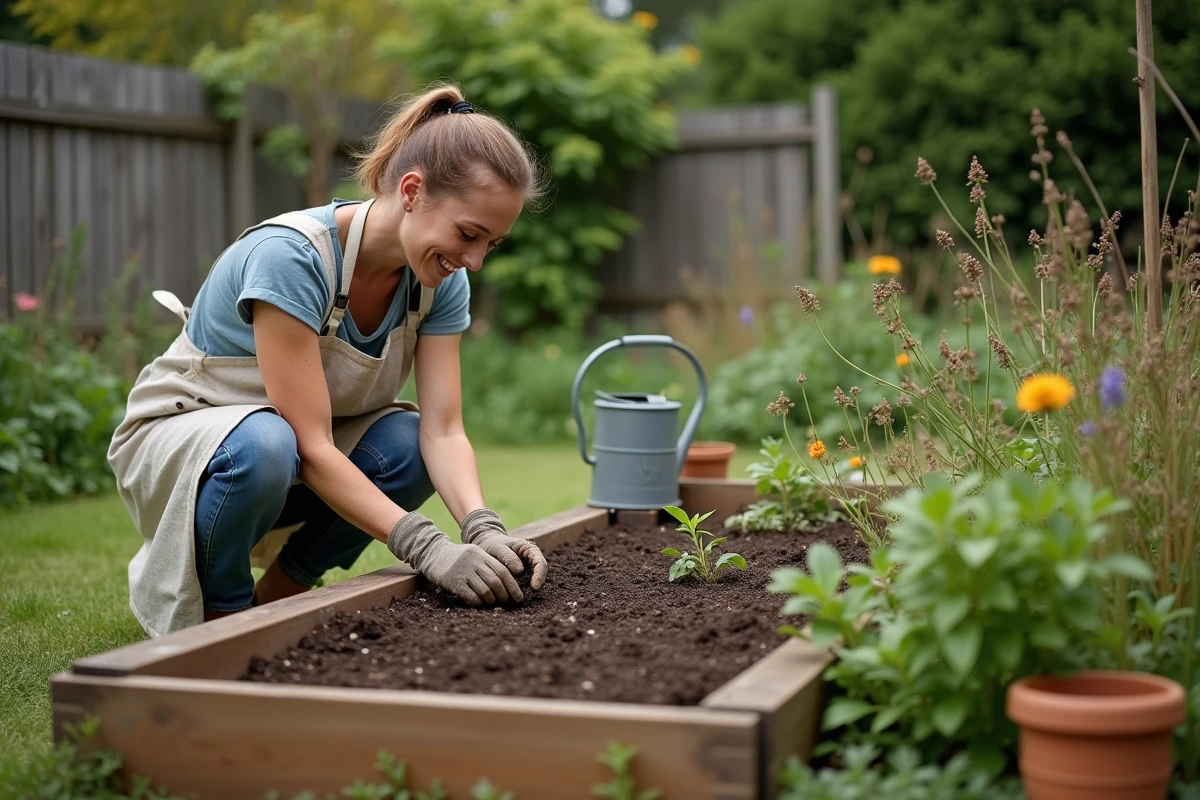
A natural and eco-responsible garden relies on precise technical choices, not vague intentions. Living soil, permanent cover, plant selection adapted to the pedoclimatic context: each decision influences the resilience of the system over several years.
Soil analysis and substrate choice for a sustainable natural garden
Before any planting, we recommend a complete soil diagnosis. The pH, texture (clay, loam, sand), and organic matter content dictate the viable plant palette. Planting without this data is like working blind.
A compact clay soil requires a structural amendment (mature compost, wood chip mulch) to improve drainage and microbial life. A sandy soil, on the other hand, needs regular organic matter inputs to retain water. The type of soil determines the entire landscaping strategy.
We observe that the majority of failures in eco-responsible gardening stem from a poor match between the chosen plants and the reality of the terrain. The resources available on the L’Esprit Nature garden site help refine this thinking by cross-referencing species and local conditions.
A simple test: take a handful of moist soil and form a sausage shape. If it cracks, the soil lacks clay. If it remains sticky and shiny, you are dealing with heavy clay that requires structural work before any cultivation.
Permanent soil cover: mulching and living mulch
Never leave the soil bare is the most documented principle of resilience in permaculture and agroecology. An exposed soil loses its water through evaporation, sees its microfauna decline, and encourages weed emergence.
Organic mulching (dead leaves, straw, wood chips) is the most accessible solution. A sufficiently thick layer limits evaporation, nourishes earthworms, and regulates soil temperature in both summer and winter.
Living mulch versus inert mulch
Living mulch (white clover, phacelia, mustard) offers an advantage that traditional mulching does not: atmospheric nitrogen fixation and root structuring of the soil. Dwarf white clover, for example, covers the base of shrubs while enriching the substrate.
However, living mulch requires monitoring. It must be mowed before it goes to seed to prevent it from competing with the main plantings. Inert mulch, on the other hand, decomposes slowly and needs to be renewed once or twice a year depending on the climate.
- Wood chip mulch (fragmented branch wood): suitable for shrub beds, slow decomposition, good carbon/nitrogen ratio
- Cereal straw: economical, ideal for vegetable gardens, but may contain residual seeds
- Living mulch (clover, alfalfa): fixes nitrogen, structures the soil, but requires active mowing management
- Shredded dead leaves: free, excellent winter protection, rapid decomposition in spring
Plants adapted to water restrictions and dry soils
Specialized nurseries have noticed a significant increase in requests for dry gardens since repeated drought episodes. With water restriction orders becoming recurrent in many regions, an eco-responsible garden must integrate water constraints from the design stage.
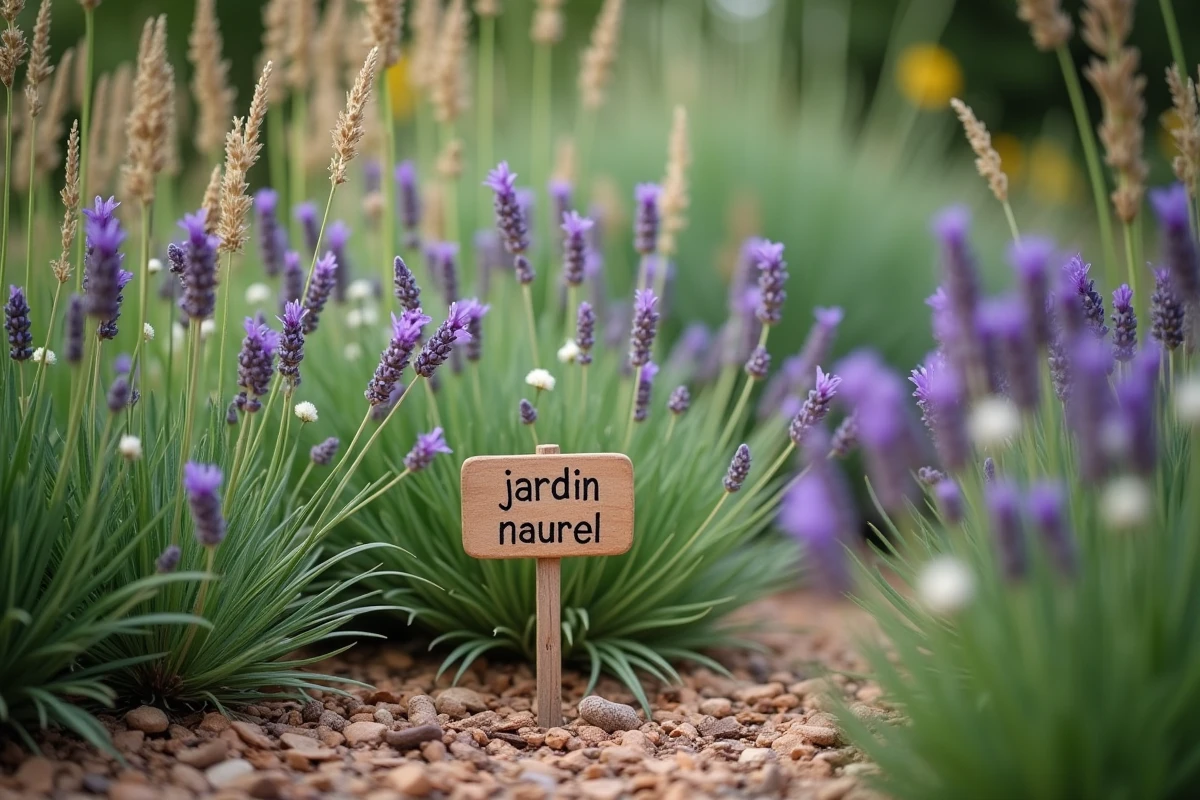
Mediterranean plants (lavender, rosemary, rockrose, santolina) are not limited to the south. In well-draining soil, they thrive well beyond their native range. Ornamental grasses (stipa, miscanthus, blue fescue) complement the palette with almost no maintenance.
Ground covers resistant to replace lawn
Traditional grass is the most water and labor-intensive part of a garden. We recommend partially or completely replacing it with ground-covering plants: creeping thyme, yarrow crithmifolia, lippia nodiflora. These species tolerate light foot traffic and require no watering once established.
The transition can be done in zones. Keep a functional lawn area for children and convert borders and slopes into ground covers. The visual effect is richer than a uniform lawn, and the maintenance time drops drastically.
Regulations on pesticides and biocontrol in the garden
As of January 1, 2024, several phytosanitary products intended for individuals have been withdrawn from sale or heavily restricted in France and Belgium. Selective herbicides for lawns and general-purpose insecticides are no longer available for amateur gardeners.
This restriction accelerates the shift towards biocontrol: beneficials (ladybugs, lacewings), plant extracts, associations of repellent plants. The principle is simple: create an ecosystem where pests have natural predators rather than treating the symptoms.
Functional plant associations
Some combinations of plants reduce pest attacks without intervention. Marigolds at the base of tomatoes limit nematodes. Borage attracts pollinators and repels certain harmful insects from the vegetable garden.
- Basil + tomato: repellent against aphids and whiteflies
- Nasturtium at the edge of the vegetable garden: aphid trap, protects neighboring crops
- Isolated fennel: attracts hoverflies (predators of aphids) but inhibits the growth of many vegetables if too close
These associations do not replace a healthy soil and established biodiversity, but they complement an already balanced system. A natural garden functions as a network of interactions, not as a collection of isolated plants.
Creating an eco-responsible space requires an initial investment in observation and diagnosis, after which the system gradually self-regulates. The first years are the most demanding in terms of soil preparation and planting work. Once past this stage, the garden gains autonomy, and the time spent on maintenance decreases each season.