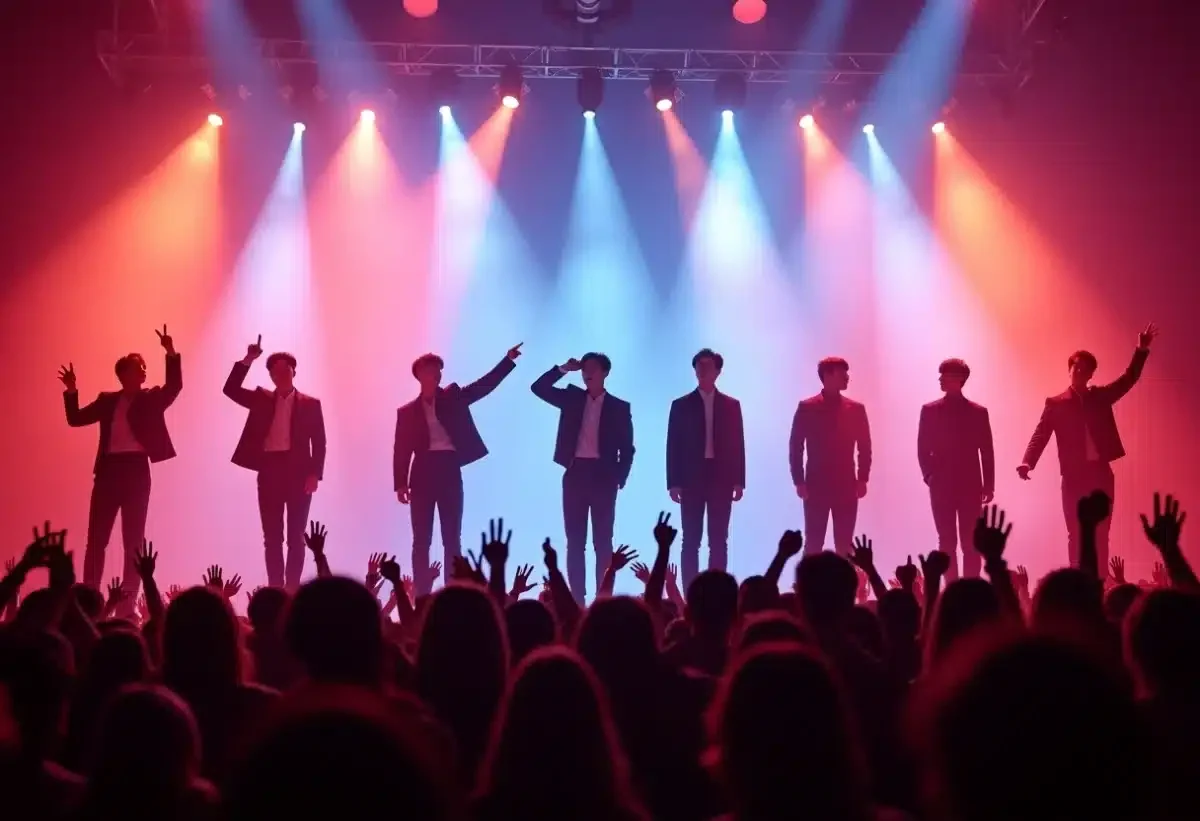
The global music industry has been shaken by the arrival of a phenomenon from South Korea: K-Pop. Among the groups that have marked this scene, BTS stands out with a meteoric rise. This group, composed of seven young artists with multiple talents, has managed to conquer an international audience in record time.
BTS, also known as Bangtan Boys, has successfully blended elements of pop, hip-hop, and R&B, creating a unique and recognizable sound. The members, whose ages range from their twenties to thirties, constantly reinvent their image and music, captivating fans from all walks of life. BTS’s success is not only based on their music but also on their message of hope and resilience, resonating with an entire generation.
The Beginnings and Rise of BTS
BTS, the South Korean boy band, was formed in 2013 by the label Big Hit Entertainment. Originating from South Korea, the group quickly made a name for itself in the world of K-Pop thanks to a unique combination of musical talents and elaborate choreography. From the very beginning, the members of BTS demonstrated unwavering determination and an ability to innovate, qualities that played a fundamental role in their rapid ascent.
The early years of the group were marked by a series of growing successes, but it was truly with the release of the album ‘Love Yourself: Tear’ in 2018 that BTS conquered an international audience. This critically acclaimed album allowed the group to rise to the top of global charts. The tracks ‘Dynamite’ and ‘Butter’ solidified their status as global superstars, reaching streaming and sales records.
The impact of BTS is not limited to music. The group has managed to strike a chord by addressing themes such as mental health, self-love, and resilience. Their collaboration with UNICEF for the ‘Love Myself’ campaign is a testament to this. In 2022, the members of BTS even met with U.S. President Joe Biden, illustrating their growing influence beyond the borders of music.
The group’s fanbase, known as ARMY, also plays a key role in their success. Devoted and passionate, it serves as an unwavering support force for each member of BTS. This global community, present in both the United States and Europe, demonstrates the universal reach of the group and its immense cultural impact on the music industry.
As they celebrated their 10th anniversary in 2022, BTS continues to reinvent themselves and push the boundaries of K-Pop, while significantly contributing to the economy of South Korea.

The Age of the Members and Their Impact on K-Pop
The group BTS consists of seven members: J-Hope, Jimin, Jin, Jungkook, RM, Suga, and V. These artists, born between 1992 and 1997, all began their musical careers at a young age. Their youth and dynamism have allowed the group to captivate a diverse global audience, ranging from teenagers to young adults.
- Jin, born in 1992, is the oldest member of the group.
- Suga and J-Hope, born in 1993 and 1994 respectively, bring their unique touch to BTS’s music.
- RM, the leader of the group, was also born in 1994.
- Jimin and V, both born in 1995, are known for their charisma and talent on stage.
- Jungkook, the youngest, born in 1997, often embodies the energy and versatility of the group.
The age of BTS members has a direct impact on their ability to reach various generations. Their youth and modernity make them particularly appealing to new generations of K-Pop fans, while maintaining a connection with older listeners through the maturity of their music and messages.
Their influence extends far beyond music. The members of BTS have become cultural icons, influencing fashion, trends, and even public discourse on social issues. Through their work with UNICEF and their stances on topics like mental health, they demonstrate a social consciousness that few artists of their generation possess.
This combination of youth, talent, and social awareness makes BTS a unique group, capable of transcending cultural and generational boundaries. Their impact on K-Pop and on global culture in general is undeniable, and they continue to redefine what it means to be a music star in the modern era.