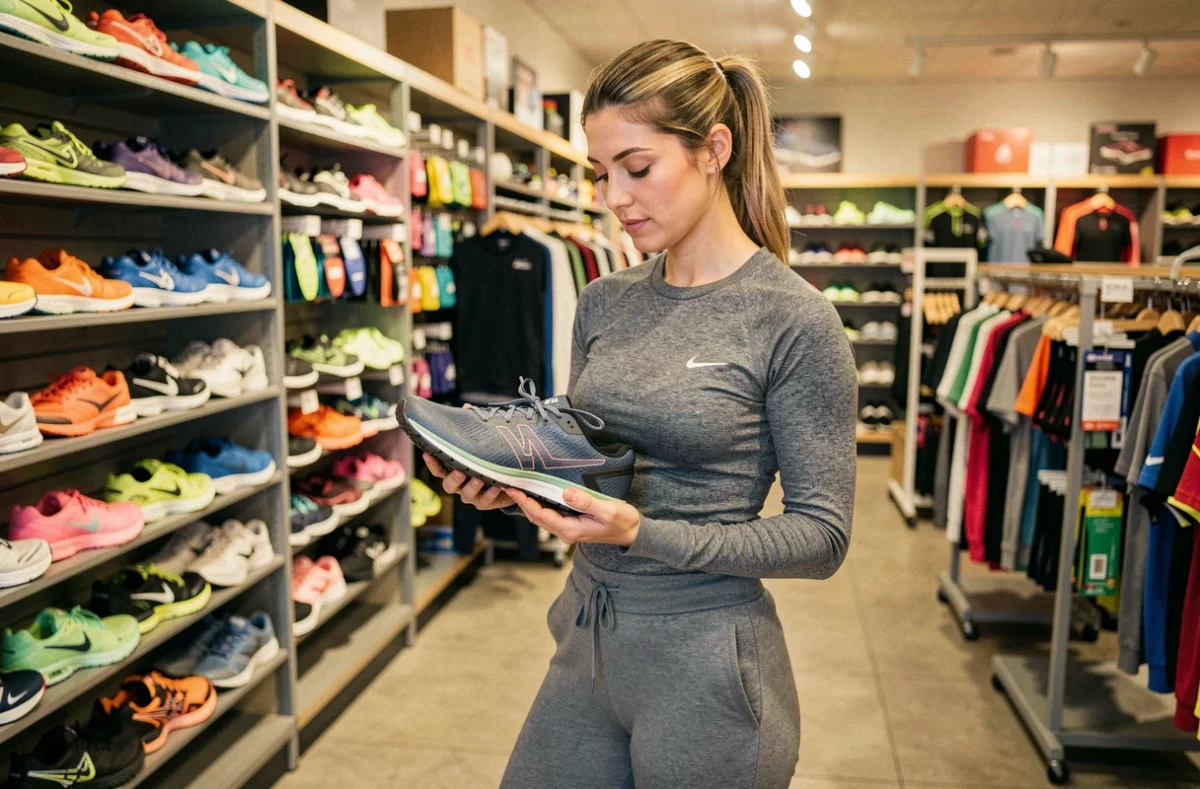
Sports equipment should be judged by how it performs in use, not by how it looks on the shelf. Comfort during a real-world trial is the most reliable way to avoid injuries—far more so than the technical specifications printed on the label.
Choosing equipment that suits your goals also means considering factors that are rarely discussed: repair costs over time, compliance with competition rules and, for athletes with disabilities, whether the equipment is genuinely compatible with the club you have in mind.
Repairability and maintenance costs: the overlooked factors when choosing sports equipment
A cheaper model can cost much more over two or three seasons if it cannot be repaired. Repairable equipment is often more cost-effective in the long run than a budget product that has to be replaced after a few months of intensive training.
Take a common example: a pair of running shoes whose midsole compresses after a few hundred kilometres. If the manufacturer offers resoling or a take-back programme, the total cost of ownership goes down. By contrast, a glued model that cannot be repaired means having to replace the entire pair.
The same applies to strength-training accessories (pulley cables, bench upholstery), exercise bikes (belts, bearings) and team sports equipment (nets, protective gear). Before buying, check whether spare parts are available and whether the manufacturer has a repair network. A catalogue featuring Format Sport sports equipment makes it possible to compare these factors across several product ranges.
The Sports Impact Report published by Decathlon and Sport 1.5 supports this point: for the runner profiles studied, shoes were the biggest contributor to the climate impact of running gear. Length of use, repair and second-hand purchases were identified as the main ways to reduce that impact.

Compliance with competition rules: check before you invest
Equipment that is perfect for training is not necessarily approved for competition. Federations set requirements that vary by sport, age group and level of participation. These rules cover technical specifications, safety and, in some cases, the condition of the equipment.
Common examples of non-compliance
- In swimming, some high-buoyancy suits have been banned from federation competitions for several years, even though they are still sold for open-water training
- In road cycling, frame dimensions, saddle position and wheel type are governed by detailed technical rules that vary by category
- In combat sports, glove weight, shin guard type and helmet certification vary between organisations and age groups
Check your federation’s technical rules before buying any equipment intended for competition. A quick call to your club or regional league is usually enough to clear up any uncertainty.
Test equipment in real-world conditions
A shop fitting gives you an idea of size and fit, not how the equipment performs in practice. For running shoes, for example, how comfortable they feel during a 30-minute run on your usual terrain is a more useful guide than your gait type as analysed on a treadmill.
Comfort matters more than technical criteria such as pronation or drop. Available evidence shows that no shoe feature on its own can guarantee injury prevention. Gradually transitioning to a new model and increasing your training load sensibly offer better protection than buying the latest technology.
How to test home fitness equipment
For a treadmill, exercise bike or rowing machine, negotiate a trial period or buy from a retailer that accepts returns after use. Test the equipment over at least three sessions at different intensities.
Assess the noise while it is running (often underestimated for home workouts), its stability at high intensity and how smoothly you can adjust it between exercises. A noisy or unstable machine will be abandoned within a few weeks, whatever the price.

Accessibility and adaptive sports: check with your club before buying
For athletes with disabilities, choosing suitable equipment is not something you can do from a catalogue alone. Trying it out with your club is an essential first step, not an optional extra. Each sports prosthesis, competition wheelchair or specialist orthosis has requirements that vary by sport and level of mobility.
Financial assistance depends on individual circumstances and the schemes currently available. Before making a purchase that could cost several thousand euros, check the requirements with the relevant organisations (MDPH, health insurer, adaptive sports federation). Buying in haste without consulting your club could leave you with equipment that is incompatible with team training.
A pre-purchase checklist: factors to consider together
Rather than relying on a generic shopping list, weigh up these factors for each piece of equipment you are considering:
- Your main goal (competition progress, staying fit, rehabilitation) and how often you train each week
- Availability of spare parts and estimated maintenance costs over two seasons
- Compliance with your sport’s technical rules, confirmed with your club or federation
- Whether you can test the equipment in real-world conditions before committing to the purchase
- Whether the equipment suits your body type and any physical limitations you may have
This checklist applies to everything from running shoes to a home rowing machine or a basketball wheelchair. The most suitable equipment is not necessarily the most expensive or technologically advanced: it is the equipment you are still using six months later, because it fits the reality of your sport, your budget and the rules you need to follow.