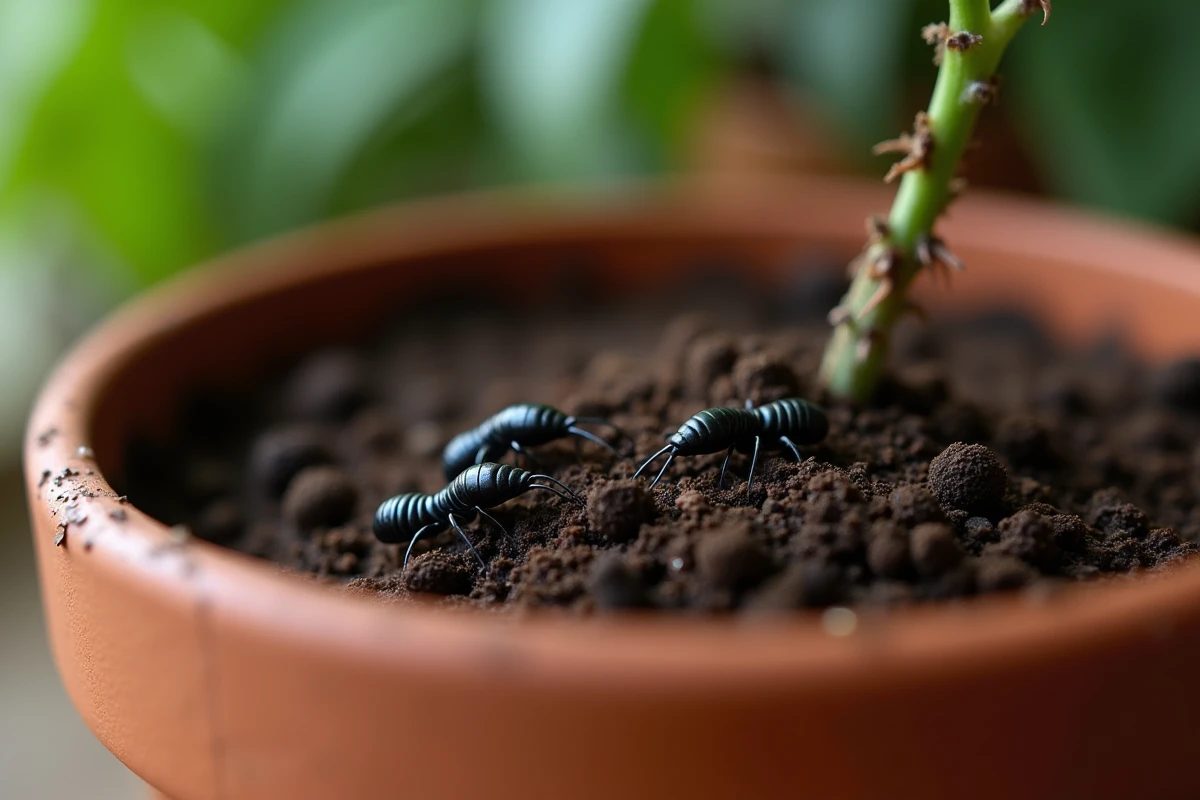
Black springtails are often discovered by chance, when lifting a flower pot in the bathroom or inspecting a tile joint in the basement. These tiny hexapods, often mistaken for fleas, appear by the dozens in rooms where humidity stagnates. Before attempting to eliminate them, it is beneficial to understand what their presence indicates about the actual condition of the home.
Black springtails as a signal of a moisture problem in the building
Springtails do not settle randomly. They exclusively colonize areas where the humidity level remains high for extended periods. When found in a kitchen, bathroom, or crawl space, the priority is not to eliminate them, but to understand why they are there.
The Anses, in its guide “Mold and Humidity in Housing” published in 2023, mentions that springtails are considered bio-indicators of an imbalance in the building. Their massive presence indoors points to a lack of ventilation, untreated infiltration, or faulty insulation that promotes condensation.
Finding black springtails in a corner of a wall or under a sink is like receiving a free diagnosis. The problem is not the animal; it is the water they follow. There are several tips against black springtails in the house that work in the short term, but without correcting the source of humidity, they return systematically.
The environmental regulation RE2020 in France has indeed strengthened the requirements for hygrothermal performance of new constructions. In some very humid regions, particularly along the Atlantic coast, the massive presence of springtails in basements and crawl spaces now serves as a warning criterion during inspections of new buildings.
Locating moisture areas using black springtails
Rather than spraying insecticide throughout the house, we use the distribution of springtails as a map. Each concentration indicates a moisture source that needs to be addressed.
Typical concentration points
- Under the sink or washbasin, where a faulty seal or a leaky trap goes unnoticed for months. Springtails gather there because the moldy soil provides them with food and moisture.
- Along the baseboards on the ground floor, especially when the crawl space is poorly ventilated. Humidity rises by capillarity and springtails follow the path.
- Around single-glazed or poorly installed windows, where condensation creates a permanent film of water on the frame. They are found in the lower corners of the frame in the morning.
- In the soil of overwatered indoor plants, a classic. The substrate remains soaked and becomes a perfect incubator.
Each identified source calls for a different response. Fixing a leak is better than treating the entire room.
A simple DIY test
Place a piece of damp cardboard flat in the suspected area in the evening. The next morning, if springtails have gathered underneath, the source of moisture is confirmed at that specific location. This rudimentary trap allows for prioritizing interventions without investing in measuring equipment.
Natural methods to eliminate black springtails indoors
Once the sources are located and the cause identified, we can act on the springtails themselves with simple solutions. The goal is not to eradicate a species (springtails play a useful role in decomposing organic matter in the soil), but to make the interior inhospitable for them.
Drying out the affected areas
Lowering the humidity level remains the most effective method. An electric dehumidifier in a basement room or a bathroom without a window changes the game in a few days. Springtails cannot tolerate dry air and will leave the area or die quickly.
Opening windows at least twice a day, even in winter, for about ten minutes renews the air and breaks the humidity cycle. If the mechanical ventilation system is not functioning properly (feedback varies on this point depending on the installations), have the extraction vents and the motor unit checked.
White vinegar and diatomaceous earth
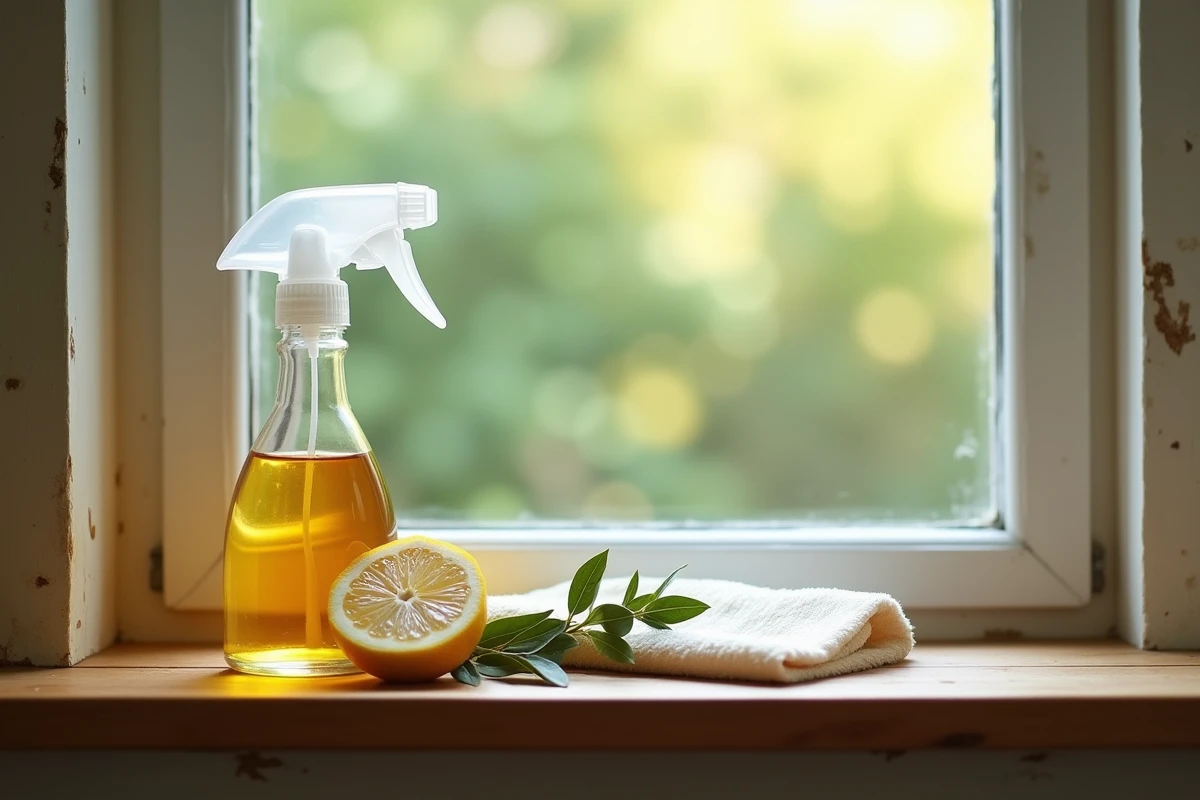
Spraying white vinegar directly on the passage areas acts as an immediate repellent. It is sprayed on baseboards, window frames, and under sinks. The smell dissipates within a few hours, but the repellent effect persists.
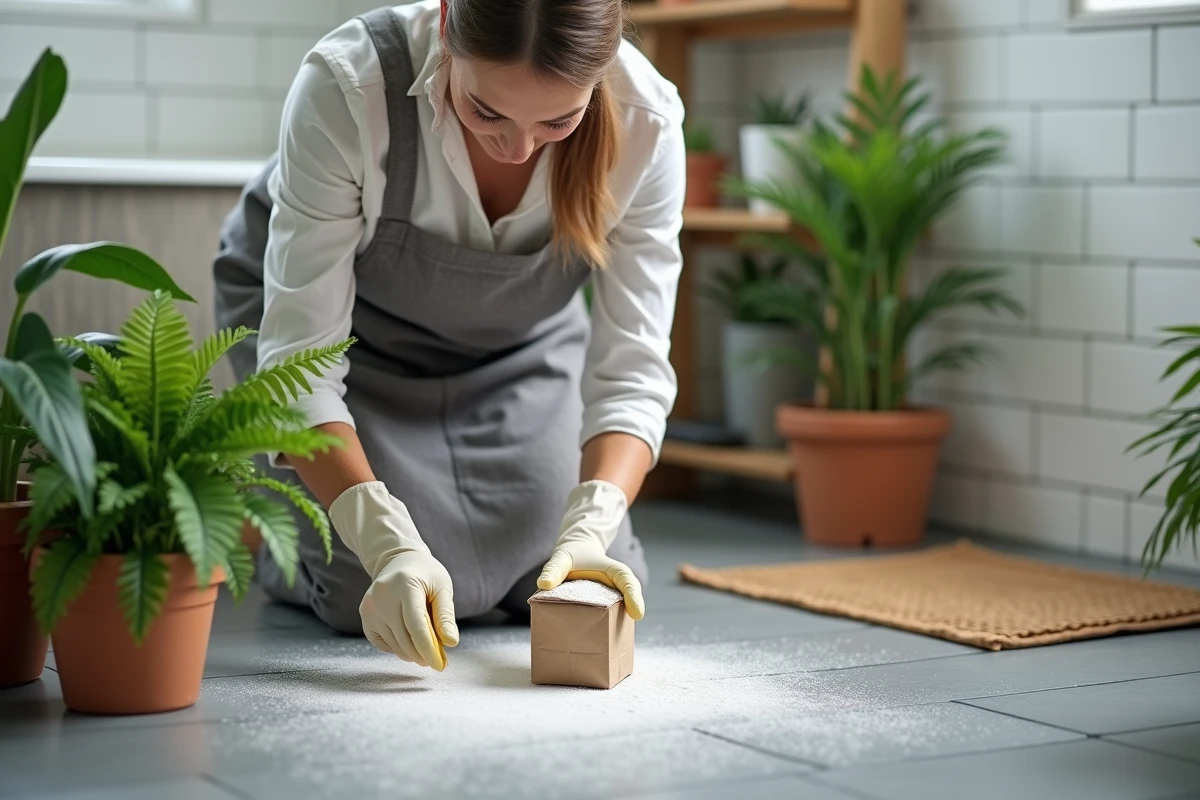
Diatomaceous earth, sprinkled in a fine layer along baseboards and under furniture, dehydrates springtails on contact. The non-calcined version is used, which is safe for inhabitants. It loses its effectiveness if it becomes damp, which requires regular reapplication in humid rooms, but this is an additional indicator that humidity is not yet under control.
Reducing watering of indoor plants
The soil in pots is often the first source of springtails in a living room or bedroom. Allowing the substrate to dry between waterings eliminates the colony in a few weeks. One can also replace the top layer of soil with coarse sand or clay balls, which dry quickly and make the surface inhospitable.
Black springtails and insecticides: why we avoid them
Chemical insecticides kill springtails on contact, but pose two concrete problems. The first: they do not address the cause. Without correcting the humidity, a new colony settles in a few weeks. The second: springtails live in hard-to-reach corners (inside walls, under slabs, in technical ducts), where the product does not penetrate.
An insecticide treatment in a poorly ventilated basement adds chemical compounds to air already laden with mold spores. We accumulate problems instead of solving them. Eliminating the source of humidity makes springtails and mold disappear at the same time.
Each source of black springtails in a house points to a leak, a ventilation defect, or a thermal bridge that needs to be corrected. Addressing the cause makes treating the animal unnecessary.